
The Ultimate Guide to 3D Printing with Pellets
Introduction
For years, spooled filament has been the undisputed king of desktop 3D printing. It’s convenient, easy to store, and highly standardized. But as your 3D printing needs grow—whether you’re scaling a small business, printing massive large-format props, or looking to drastically cut material costs—filament starts to show its limitations.
Enter Pellet 3D Printing (also known as Fused Granular Fabrication, or FGF).
Instead of melting a continuous string of plastic, pellet printers use a specialized hopper and screw mechanism to melt raw plastic granules directly. It’s exactly how industrial injection molding works, and it’s rapidly taking over the prosumer 3D printing space. Here is why you should consider making the switch, and how to get started.
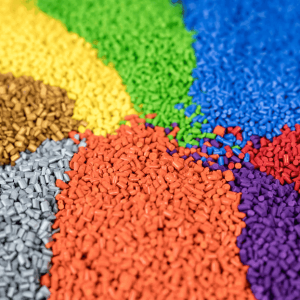
1. Why Make the Switch to Pellets?
Unbeatable Cost Savings This is the number one reason businesses switch. Manufacturing filament requires melting raw plastic, extruding it into a perfect 1.75mm string, cooling it, spooling it, and vacuum sealing it. When you buy pellets, you are skipping all of that processing. Because of this, raw pellets can be significantly cheaper per kilogram than their spooled counterparts, which translates to massive savings on high-volume projects.
Massive Output and Speed Filament extruders are limited by how fast they can melt a thin wire of plastic. Pellet extruders use a heated screw mechanism that can push a massive volume of molten plastic through much larger nozzles (often 1mm to 5mm+). If you are printing large furniture, industrial jigs, or cosplay armor, pellets can cut days off your print time.
Eco-Friendly and Recyclable Have a bin full of failed prints and supports? With a desktop shredder, you can grind those failures down into homemade pellets and run them right back through your pellet extruder. You can also mix your own custom color blends or composite materials right in the hopper.
2. What Hardware Do You Need?
You don’t necessarily need to buy a massive, $10,000 industrial machine to print with pellets. Many users are modifying their existing FDM (Fused Deposition Modeling) printers.
To make the jump, you will need:
A Pellet Extruder Head: Brands like Mahdi, Pulsar, and Lily make specialized extruders that can be mounted to standard large-format printers.
A Hopper or Feeder System: You need a way to continuously feed pellets into the extruder. Some use a simple gravity hopper mounted above the print head, while larger systems use a vacuum tube system to pull pellets from a large bucket on the floor.
3. The Best Materials to Start With
If you are setting up a pellet extruder for the first time, you want materials that are forgiving, flow consistently, and don’t require extreme temperatures.
PLA Pellets: Just like with filament, PLA is the ultimate “Gateway Material” for pellet printing. It requires low heat, has almost zero warping, and is incredibly easy to dial in. Our PLA-3D Printing Pellets are currently our best-selling material for users testing new high-flow systems.
PETG Pellets: Once your machine is calibrated, PETG is the perfect step up. It offers the ease of PLA but brings the durability, slight flexibility, and temperature resistance needed for functional, real-world parts. PETG-3D Printing Pellets are ideal for mechanical prototypes and outdoor fixtures.
Conclusion
Transitioning to pellet 3D printing requires an upfront investment in new hardware and a bit of a learning curve to dial in your flow rates. However, if you are chewing through dozens of spools a month, the switch will pay for itself in material savings alone.
Ready to fire up your hopper? At ABC3D, we supply premium, moisture-free 3D printing pellets ready for your next large-scale project. 👉 Shop Bulk PLA and PETG Pellets Here